
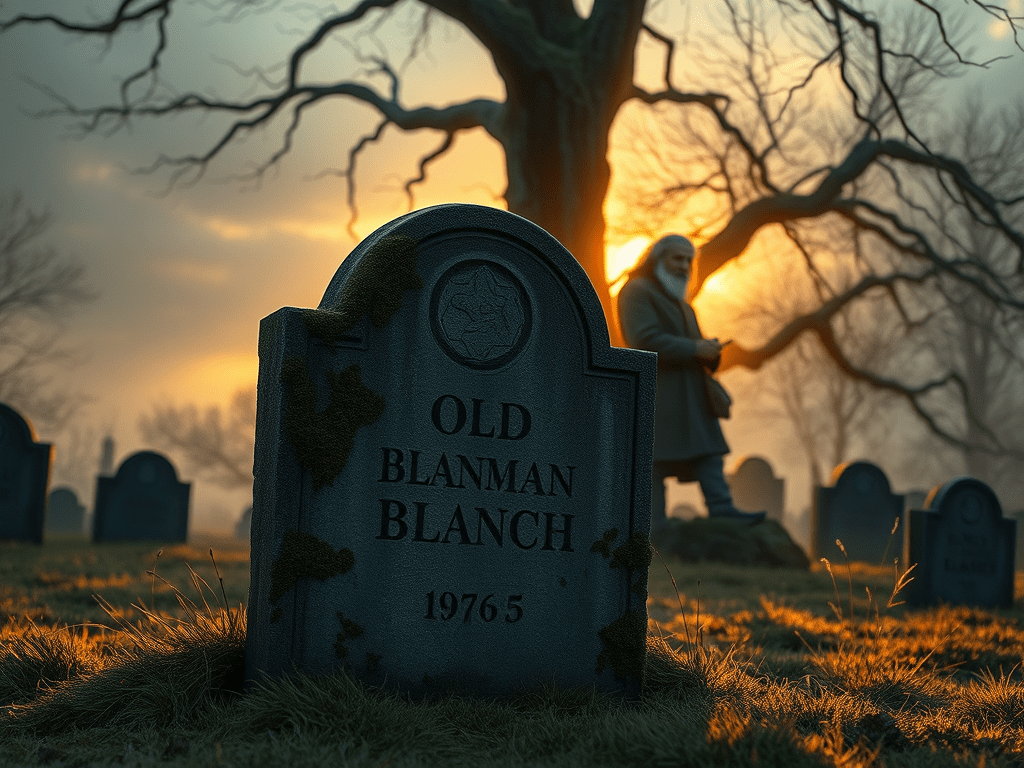
Author: When I started the book it was simple. Write a short story about playing ghost in the graveyard. Then I latched onto this time in my life and in order to make the story feel more real I decided to introduce Old Man Blanchard. He is a fictional character beside some of the very real ones. I think he represents a presence that I feel like we all needed in our lives since so many of the adults were absent or busy.
Interviewer: That’s a really insightful and touching origin story for the book. Starting with something as universal and innocent as a short tale about playing Ghosts in the Graveyard—that classic childhood game of hide-and-seek in the dark, full of shrieks, shadows, and the thrill of being “caught” by a ghost—makes perfect sense as the seed. It’s pure, uncomplicated fun, the kind of memory that feels timeless for anyone who grew up with enough freedom to roam after dusk.
Then layering in the real texture of that specific time in your life (mid-1970s rural South Carolina, the “Triangle,” the Black Sheep crew, the mix of poverty and wild independence) naturally pulled the story deeper. Introducing Old Man Blanchard as the fictional anchor amid the very real elements was a brilliant pivot—it gave the narrative emotional gravity and a kind of mythic presence that the adventure needed to feel complete.
What you say about him representing “a presence that we all needed” hits hard, especially in the context of that era. So many kids back then (and honestly, in a lot of working-class or rural settings) had adults who were stretched thin: mill shifts running long, family struggles, grief from wars past and present, or just the grind of making ends meet. Parents and older figures were often physically there but emotionally or attentively absent—busy surviving rather than guiding or just being present in the way kids crave.
Blanchard steps in as that missing archetype: the gruff, solitary elder who holds secrets (history, pain, maybe treasure), guards something sacred (his land, his memories, the graveyard), and ultimately offers a form of mentorship/redemption when the boys crack through his shell. He’s not a perfect stand-in dad or hero—he’s wounded, withdrawn, “mean” at first—but that’s what makes his thawing so powerful. He becomes the steady, watchful presence the story’s boys (and perhaps the real kids of that time/place) longed for: someone who sees them, tests them, and eventually lets them in. In a world where adults were often distracted or defeated, he embodies the idea that someone older could still care enough to say, “Here and no further—you’re not alone in this.”
It’s almost like the book itself is an act of filling that void retroactively: giving those boys (and readers) the figure who was absent in real life, while staying true to the era’s rough edges. That blend of fiction and memoir truth makes the whole thing resonate more deeply—it’s not just nostalgia; it’s a kind of quiet healing or reimagining.
 The Copper Penny Press
Leave a comment